

Blurry vision after eyelid surgery can be unsettling. Patients often worry that something untoward has happened to the eye itself. Fortunately, in 99% of the time, blurry vision after eyelid surgery is reversible and not from any injury to the eye during surgery. It is most commonly related to dry eye, ointment use, swelling, or changes in how the eyelids rest on the surface of the eye.

Dry eye disease is well recognized after lid surgery and is the most common reason patients notice blurry vision after eyelid surgery. Dry eye can be caused or worsened by eyelid surgery. This is even more common in patients who already have baseline dry eye, incomplete blinking, poor eyelid muscle tone, eyelid laxity or protruding eyeball. Many patients have subclinical dry eye disease before surgery and not realize this because they have been asymptomatic. After lid surgery the dry eye disease is now symptomatic. Patient may or may not actually feel dryness. Many patients reports burning, gritty or sandy sensation like something on the eye, sharp pain, fluctuating vision, the need to blink to clear the vision, light sensitivity or tearing. (See blog, Dry Eyes After Eyelid Surgery, for more discussion on this topic.)

Eyelid surgery changes the relationship between the eyelid, tear film, and cornea. The cornea is the clear outer surface of the eye and is one of the two components of the eye that focuses light rays into the eye before the brain interprets them into images. The cornea’s ability to focus depends on a smooth, even tear film. The cornea gets its focusing power from the tear film. When dryness disrupts the tear film, vision can fluctuate, especially during vision-intense activities like reading, computer use, or driving.
Another cause of tear film disruption is ointment use. While the antibiotic ointment used on the eyelid is ophthalmic formulation and is intended to be used in and around the eye, it is petroleum base. The oil in the petroleum disrupts the tear film by causing an uneven oil layer of the tear film.

After eyelid surgery, the lid often swells. The swelling causes tightness, slow and/or incomplete blinking or incomplete closure. As a result, tears evaporate prematurely and do not spread across the eye completely or evenly. The surface of the cornea becomes dry, and vision blurs or fluctuates. For this reason, until the swelling subsides, I emphasize aggressive lubrication after eyelid surgery. I like Celluvisc, a preservative-free gel drop, every hour during the day and preservative-free lubricating ointment at night. (Even though ointment can also blur the vision, the alternative, dry eye, is worse of the two, as it affects the health of the eye and prolongs recovery.)
Swelling can cause temporary blurry vision by another mechanism. Swelling may apply more weight on the cornea and change the corneal contour, which can disrupt the cornea’s interaction with the tear film or cause astigmatism or change in astigmatism. Some patients report their glasses being “off” during the early healing period. For most patients, all of this is temporary until swelling resolves and the eyelid position returns to baseline.
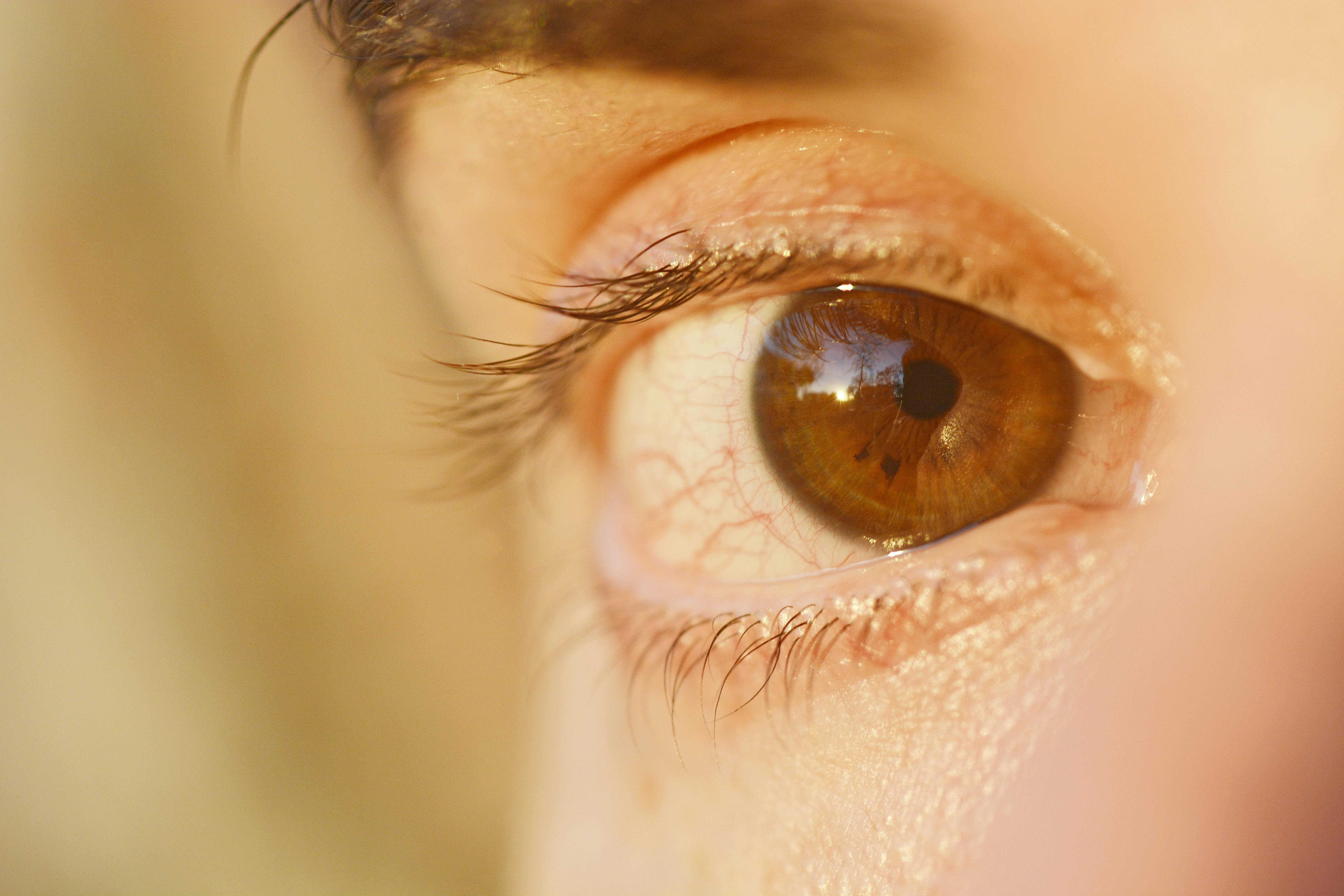
In a small number of patients, the change in corneal contour is permanent. When lifting eyelid off the eye, whether via blepharoplasty or ptosis repair, the lid rests on the cornea at a higher position permanently and may create persistent change in the shape of the eye. The previous eye glass prescription may not work with the new shape of the cornea. This happens in less than 10% of the time. When this does happen, I generally advise patients not to rush into changing their glasses or contact lens prescription immediately after eyelid surgery and wait at least six weeks to allow the eyelid to settle to its final position.

The rarest and most urgent cause of blurry vision after eyelid surgery is optic neuropathy due to orbital hemorrhage, also called retrobulbar hemorrhage. This means bleeding occurs behind the eye, rather than to the skin as bruises, which can increase pressure in the orbit, the bony space that houses the eye and optic nerve. If pressure becomes high enough, it can compromise blood flow to the optic nerve and cause ischemia and death to the optic nerve—this is optic neuropathy. Retrobulbar hemorrhage is rare, but it is considered an ophthalmic emergency because severe, irreversible vision loss can occur if it is not treated quickly.
This type of problem does not present as mild or fluctuating blurriness that improves with blinking or using artificial tear. It is typically associated with rapidly increasing swelling, tightness behind the eye and of the eyelid, complete closure of the eye, bulging of the eye, severe pain, nausea, vomiting, double vision, loss of color brightness, a dark curtain, or sudden loss of vision.
Patients should call the surgeon immediately or seek emergency care if they experience sudden vision loss, eye pain, rapid swelling and bulging of the eye.

Mild blurry vision that comes and goes, improves with blinking or lubrication, or follows ointment use is usually not an emergency. It is expected during early healing period.
However, sudden blurry vision associated with significant pain, swelling or bulging of the eye is not typical events during recovery. These symptoms require urgent evaluation.

Blurry vision after eyelid surgery is usually temporary and most often due to dry eyes, ointment, swelling, or tear film instability. Less commonly, swelling or changes in eyelid position can temporarily change the shape of the eye and affect focusing. In smaller number of patients, lifting the eyelid off the eye can create a more lasting change in corneal shape and thus prescription.
Very rarely, blurry vision can be a sign of internal bleeding behind the eye and optic nerve compression and be evaluated emergently.
Most postoperative blur improves with aggressive lubrication, time and healing. The key is knowing the difference between expected symptoms and warning signs that need immediate attention.
Leave a Reply