
Long before the global wave of K-pop, there was K-beauty. Traditional Korean skincare began with herbal medicine rooted in natural botanicals such as rice, camellia oil, ginseng, licorice root, green tea, and mugwort. By the 1980s, Korea blended this heritage with modern science, sparking an international explosion of creams, essences, ampoules, and sheet masks.
Decades later, the demand for Korean skincare remains stronger than ever. South Korea continues to lead the world in skincare research and development, producing innovations that influence dermatology and aesthetics worldwide. One of the most recent breakthroughs to gain global recognition is PDRN (polydeoxyribonucleotide)—an ingredient featured in Vogue, Glamour, Elle, and even The Wall Street Journal. This is not just another fleeting TikTok trend; PDRN is backed by science.
What Is PDRN?
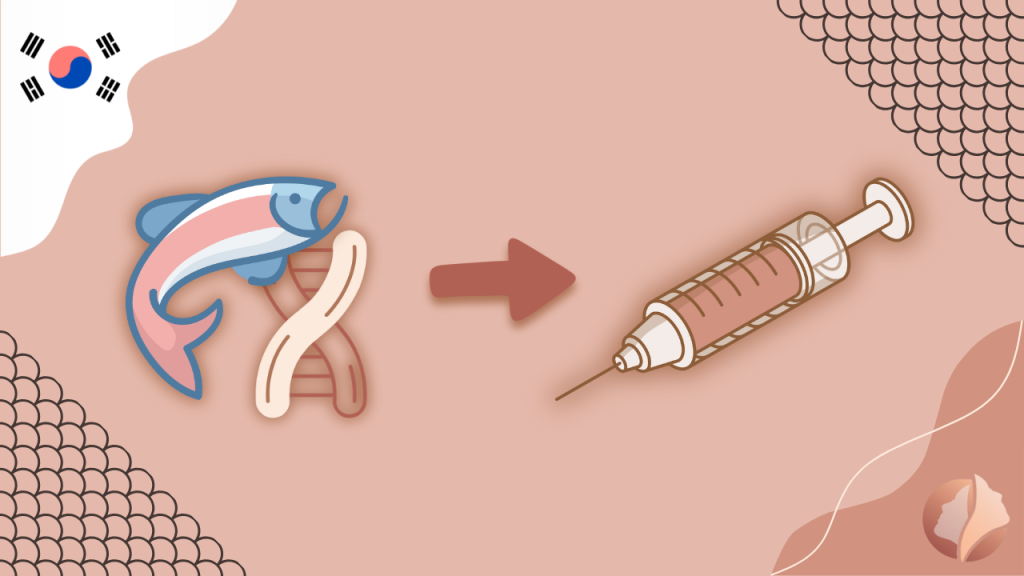
PDRN is a DNA fragment extracted from salmon or trout. It acts as a biostimulator, similar to growth factors, and supports the skin’s healing and regeneration through 5 key mechanisms:
- Reduces inflammation.
PDRN binds selectively to A2A receptors, decreasing inflammatory cytokines (TNF-α, IL-6), increasing anti-inflammatory cytokines (IL-10), and improving microcirculation. Clinically, patients experience less redness and irritation after procedures such as lasers or microneedling. - Boosts collagen and elastin production.
By upregulating TGF-β and enhancing type I collagen deposition, PDRN increases fibroblast activity and improves elastin and hyaluronic acid production—resulting in smoother and plumper skin. - Accelerates wound healing.
PDRN stimulates angiogenesis (new blood vessels), granulation tissue formation, keratinocyte migration, and re-epithelialization. This significantly supports post-procedure recovery, including after lasers and RF microneedling. - Enhances cellular repair and energy.
It provides nucleotides and nucleosides—the essential building blocks for DNA replication and repair—leading to stronger cell turnover and a more resilient skin barrier. - Protects against UV-induced damage.
PDRN reduces UV-triggered apoptosis (cell death), promoting brighter, healthier-looking skin.
How PDRN Is Used in Korea
For more than a decade, PDRN has been injected as a “skin booster” in Korea. Small aliquots are injected every 1 cm² across the face every four to six months. With numbing cream, the procedure is well tolerated. Patients may experience dime-sized swelling at the injection sites for few hours and pinpoint bruising for several days. Improvements—smoother texture, more even tone, and a noticeable glow—typically begin at three weeks. By weeks four to six, as collagen, hyaluronic acid, and vascular remodeling peak, the skin appears firmer and more elastic.
Although intradermal PDRN injection is not FDA-approved in the United States, it is commonly used off-label. More than 50 peer-reviewed studies, primarily from Korea and Italy, support its safety and efficacy.
How We Use PDRN at LaFace
At our practice, we use Korean and Italian PDRN in four targeted ways:
- Post-procedure healing:
We apply Rejuran Healing Essence immediately after Alma Hybrid laser and Morpheus8 RF microneedling to decrease redness, minimize irritation, and accelerate re-epithelialization. - Rejuran Skin Booster:
We inject the serum, like in Korea, every four to six months for supple, smooth, radiant skin. - Tear trough rejuvenation:
We inject Nucleoskin mixed 1:1 with PRP for enhanced under-eye volume and tissue repair. - Facial volumization:
We inject Rich PL in areas of thicker skin, such as the cheeks, that needs for natural, regenerative fullness.
These treatments have been transformative for both patients and providers, offering a regenerative approach to aesthetic medicine that continues to elevate results.
Leave a Reply